Under the vision of Atmanirbhar Bharat, the Government of India has set an ambitious target of gasifying 100 Million Tonnes of coal by 2030, positioning coal and lignite gasification as a strategic pillar of the nation's energy security, industrial growth and import substitution strategy.
To accelerate commercial deployment, the Government has introduced dedicated policy reforms and financial incentive schemes that support the development of coal and lignite gasification projects across the public and private sectors.
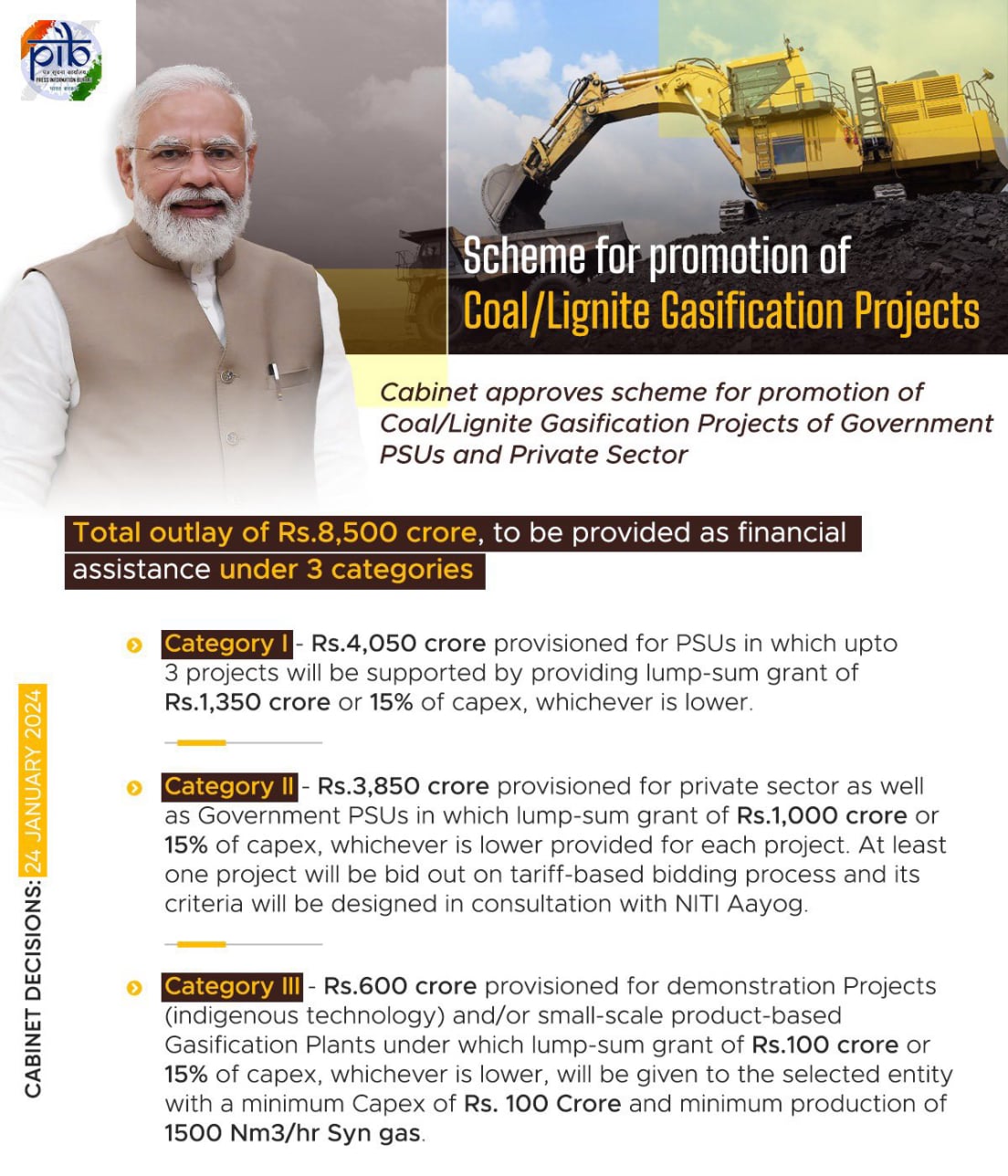
Financial Incentive Scheme – Tranche I (₹8,500 Crore)
The "Scheme for promotion of Coal/Lignite Gasification" was approved by the Indian government with a total outlay of ₹8,500 crore. This scheme aims to incentivize both public sector undertakings (PSUs) and private sector companies to invest in coal and lignite gasification projects. The scheme is structured into three categories, with financial incentives provided to projects under each category.
Targeted Entities:
The scheme is open to both Government PSUs and private sector companies.
Categories:
Category I: Focuses on Government PSUs, with a provision of ₹4,050 crore, supporting up to 3 projects with a lump-sum grant of ₹1,350 crore or 15% of the capital expenditure (capex), whichever is lower.
Category II: Provides ₹3,850 crore for for Joint Ventures (JVs) between Government PSUs and/or the Private Sector, rather than simply any PSU or private company applying independently.
Category III: ₹600is specifically meant for Demonstration Projects and Small-scale Product-based Projects, aimed at encouraging indigenous technology development and innovation.
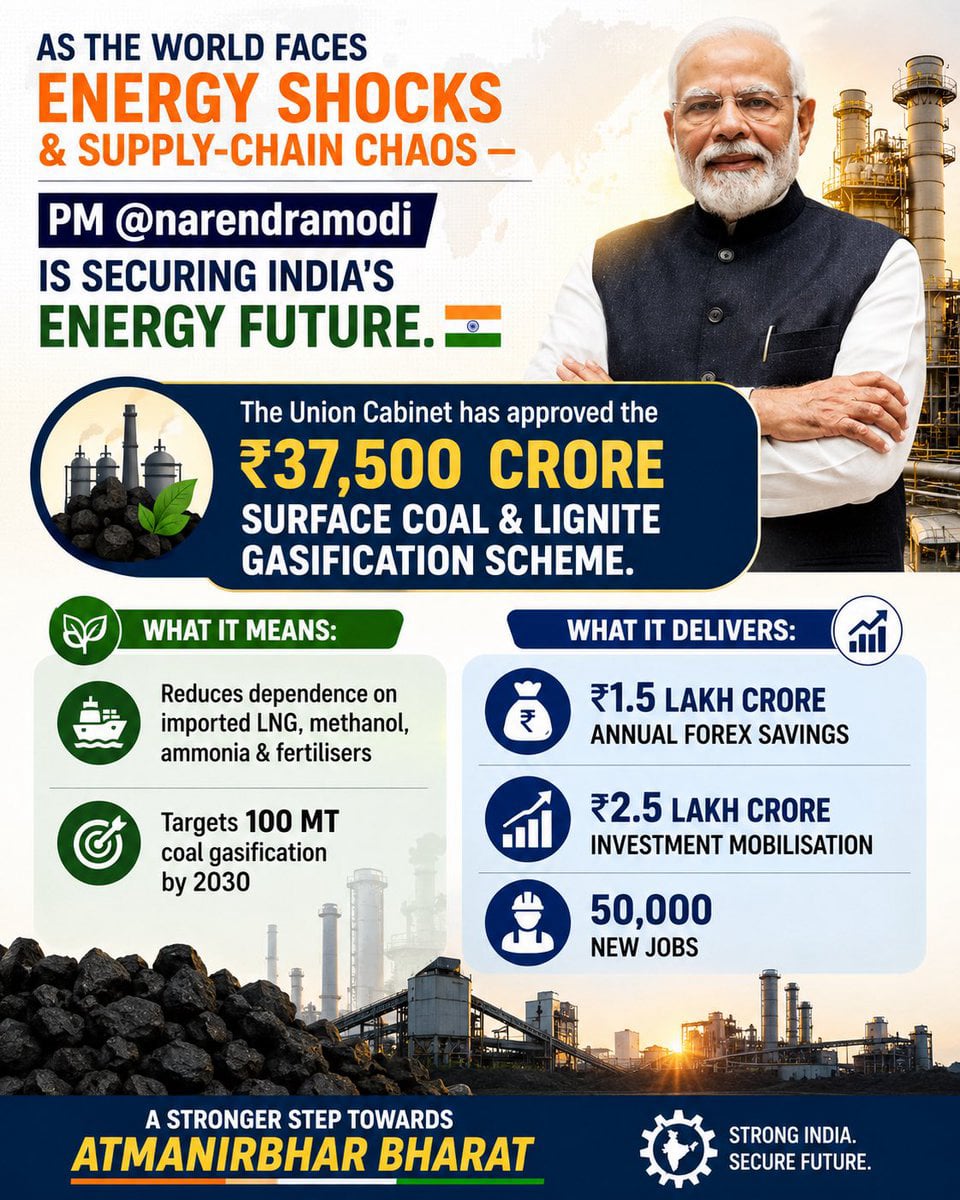
₹37,500 Crore Scheme for Promotion of Surface Coal & Lignite Gasification Projects
To accelerate the commercial deployment of coal and lignite gasification technologies, the Government of India approved the ₹37,500 crore Scheme for Promotion of Surface Coal & Lignite Gasification Projects in May 2026. The scheme marks the second phase of India's Coal Gasification Mission, building on the earlier ₹8,500 crore incentive programme and encouraging large-scale investments by both public and private sector companies.
The scheme aims to facilitate the gasification of approximately 75 Million Tonnes (MT) of coal and lignite through financial assistance of up to 20% of the eligible plant and machinery cost, with incentives of up to ₹5,000 crore per project. It is expected to attract investments of around ₹2.5–3 lakh crore, generate significant employment and strengthen India's energy security through the production of syngas and its downstream products.
The initiative is expected to accelerate the development of commercial-scale projects for the production of Synthetic Natural Gas (SNG), Methanol, Hydrogen, Ammonia, Urea, Direct Reduced Iron (DRI) and other value-added chemicals. Together with the earlier ₹8,500 crore scheme, it reinforces India's commitment to achieving the national target of 100 Million Tonnes of coal gasification by 2030.
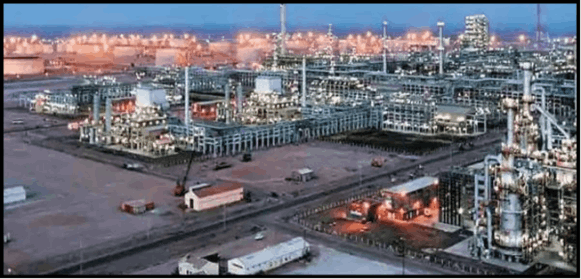
Reliance Industries Limited, Jamnagar - Worlds Largest Petcoke Gasification Project
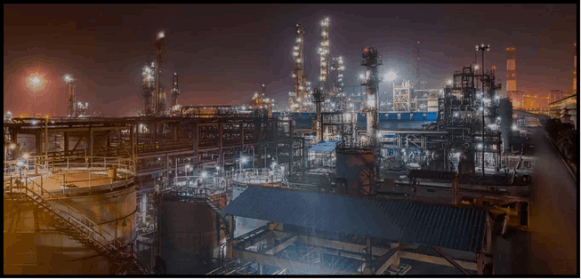
Jindal Steel Limited, Angul - World's First and Largest Coal Gasification-Based Syngas DRI Plant
Jindal Steel Limited
Talcher Fertilizers Ltd.
Bharat Coal Gasification and Chemicals Limited
Coal Gas India Ltd. (CGIL)
NLC India Limited
New Era Cleantech
Greta Energy Limited
Eastern Coalfields Limited (ECL)
Reliance Industries – NLC India
Coal India Ltd. – Niljai SNG Project
Coal India – BPCL
Karthikeya Green Fuels
Balaji Amines Limited
NTPC Limited
Gujarat Mineral Development Corporation (GMDC)
Mahanadi Coalfields Limited (MCL)
Central Mine Planning & Design Institute (CMPDI)
Projects & Development India Limited (PDIL)
The Union Cabinet has approved NIPU-2026 to encourage investments in 8–9 new urea manufacturing plants, strengthening India's fertiliser security. The policy complements the coal gasification mission by creating long-term demand for syngas-based ammonia and urea production.
The Government is finalising a dedicated policy to promote coal gasification-based urea manufacturing, providing a framework for projects using indigenous coal as feedstock and reducing dependence on imported natural gas.
The Government is finalising a dedicated policy to promote coal gasification-based urea manufacturing, providing a long-term framework for domestic fertiliser production using indigenous coal resources.
Following the approval of the ₹37,500 crore incentive scheme, the Ministry of Coal has issued guidelines and invited project proposals, marking the transition from policy announcement to commercial implementation.
The Ministry of Coal has notified comprehensive 2026 Guidelines for Underground Coal Gasification, paving the way for commercial development of deep and unmineable coal reserves across India.
The Ministry of Coal has operationalised the incentive schemes through a competitive bidding process, linking financial assistance to project performance and timely execution.
To improve investor confidence, coal linkage tenure for syngas-based projects has been extended up to 30 years, ensuring long-term feedstock security for commercial coal gasification projects.
NITI Aayog and the Ministry of Coal continue to support the development of high-ash Indian coal gasification technologies, encouraging indigenous innovation and commercial deployment.
Future policy support is expected to accelerate investments in Methanol, Dimethyl Ether (DME), Hydrogen, Synthetic Natural Gas (SNG), Sustainable Aviation Fuel (SAF), Ammonia and other coal-derived chemicals, creating a diversified downstream manufacturing ecosystem.
With strong policy support, record financial incentives and a growing pipeline of commercial projects, India is entering a new era where coal gasification will play a pivotal role in strengthening energy security, reducing import dependence and building a globally competitive downstream chemicals industry.